Supporting Autism Moms Doesn’t Mean We Aren’t Listening to Autistic Adults
When Did Autism Become Parents vs. Autistic Adults?
Somewhere along the way, it started to feel like we were being asked to choose.
If you support autism parents, you must not be listening to autistic adults.
If you talk honestly about the challenges of raising an autistic child, you must not accept your child.
If you acknowledge autism as a disability, you must be focusing on deficits.
If you talk about caregiver exhaustion, respite, fear for the future, or how incredibly hard this life can sometimes be, you're somehow making your child's autism about you.
And I keep coming back to the same question:
When did this become parents versus autistic adults?
Because I don't believe it has to be.
Autistic voices matter.
Parent voices matter.
The experiences of autistic people with significant lifelong support needs matter.
And none of those voices needs to be silenced for another one to be heard.
Nobody Gets to Speak for an Entire Spectrum
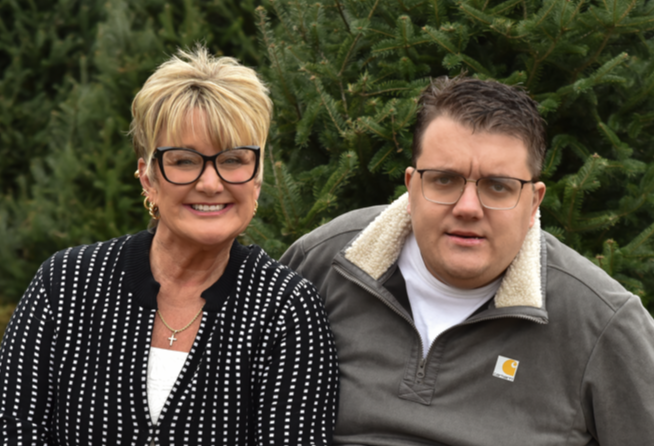
I have been raising Jordan for 30 years. He was diagnosed with autism when he was five years old, but he isn't an autistic child anymore. He's an autistic adult.
I love him exactly as he is.
I celebrate his accomplishments. I encourage his independence. I continue to push him to learn and grow, because I've seen him do things throughout his life that at one time I wasn't sure he'd ever be able to do.
And I am also still his legal guardian and full-time caregiver.
Jordan continues to need significant support and supervision in areas of his life. He doesn't have the safety awareness or independence to live on his own. There are things I continue to think about and plan for that many parents of 30-year-olds don't have to think about.
Saying that doesn't diminish Jordan.
It doesn't mean I don't accept him.
It doesn't mean I wish he were someone else.
It's simply the truth of his autism.
And his truth may look very different from the truth of another autistic adult.
That's why I believe so strongly that nobody gets to speak for an entire spectrum.
An autistic adult can tell me what autism feels like for them.
And I want to listen.
They may help me understand sensory experiences I've never experienced myself. They may explain why something that looks insignificant to me feels overwhelming to them. They may help me recognize something I misunderstood when Jordan was younger.
There are things autistic adults can teach parents that we might otherwise never understand.
We should be willing to hear them.
But listening to an autistic adult's experience is very different from assuming that person's experience represents every autistic person.
An autistic adult cannot tell me what autism feels like for Jordan simply because they share a diagnosis.
Just as I cannot tell another autism mom exactly what her child experiences simply because I've raised Jordan.
Autism is far too broad for that.
Communication ability, cognitive ability, sensory needs, emotional regulation, safety awareness, independence, behavior and lifelong support needs can look completely different from one autistic person to another.
We can learn from someone's lived experience without turning that experience into a universal one.
Listening Doesn't Require Sameness
I think about this in other areas of life, too.
Vaccines are a perfect example.
People have incredibly strong opinions about them. I have my own experiences and beliefs, just like everyone else.
But if a friend tells me about something she experienced with her child, I don't need to have had the same experience to listen to her.
I don't need to decide that because it didn't happen to me, it couldn't have happened to her.
And listening to her doesn't mean I have to adopt every conclusion she has drawn from her experience either.
I can simply acknowledge that was her experience.
We seem to have lost some of that ability in conversations surrounding autism.
Listening has somehow become synonymous with agreeing.
And disagreeing has somehow become synonymous with dismissing.
It doesn't have to be either one.
I can listen to an autistic adult and learn from their experience without assuming their experience is Jordan's.
I can disagree with someone's conclusion without telling them their lived experience doesn't matter.
And someone can listen to my experience as Jordan's mother without assuming I am trying to speak for every autism parent.
There has to be room for all of that.
Acknowledging Disability Is Not Rejecting Your Child
This is another place where I think we've made things unnecessarily black and white.
I can love Jordan exactly as he is AND acknowledge that autism significantly impacts his life.
I can accept him AND recognize his disability.
I can celebrate everything he can do AND acknowledge where he continues to need significant support.
I can listen to autistic adults AND recognize that their experiences may be very different from my son's.
And I can advocate fiercely for Jordan AND talk honestly about what almost 30 years of caregiving has required from me. None of those things contradict one another.
Acknowledging Jordan's disability doesn't diminish Jordan.
Talking honestly about what almost 30 years of caregiving has required from me doesn't diminish him either.
Both of our stories are true. Both of our experiences matter. And neither one has to disappear so the other can be heard.
Autism Moms Matter, Too
This is the part I never want us to lose. Because I know the moms reading this.
I know the mom sitting on the floor trying to help her child regulate while desperately trying to regulate herself.
I know the mom spending hours fighting with schools, insurance companies and service systems just trying to get her child what they need.
I know the mom whose child doesn't speak and who would give anything to know what they're thinking.
I know the mom raising an autistic teenager and realizing that the gap between her child and their peers is getting wider instead of smaller.
I know the mom whose autistic child is becoming an autistic adult and who is suddenly facing guardianship, government services, housing, employment and an entirely new system she has to learn.
I know the mom lying awake at 2 a.m. thinking about the question so many of us are afraid to say out loud.
Who will take care of my child when I'm gone?
I know the mom who desperately needs respite.
The mom who feels guilty for needing a break.
The mom who loves her children more than she can possibly explain and still sometimes thinks, I don't want my life to be this hard. She matters, too.
Supporting her doesn't take anything away from her autistic child.
In fact, I would argue that supporting her is one of the most important ways we can support her child.
Because she's the one who gets up tomorrow and does it all again.
She's making the appointments.
She's learning the systems.
She's advocating at school.
She's researching the services.
She's managing the behaviors.
She's planning for the future.
She's loving and teaching and redirecting and worrying and celebrating and trying again.
And for some of us, that caregiving doesn't end when our child turns 18. Or 21. Or 30.
We Don't Need Another Us Versus Them
I don't want this conversation to become another dividing line in the autism community.
That's actually the opposite of what I'm saying.
There are autistic adults whose voices parents desperately need to hear.
There are parents whose experiences autistic adults may not fully understand.
There are autistic people with significant communication, cognitive and support needs whose experiences may not be adequately represented by either conversation.
Nobody gets to speak for an entire spectrum.
Maybe instead of deciding whose voice matters most, we make room for more voices.
Maybe we listen without assuming sameness.
Maybe we disagree without immediately dismissing someone's lived experience.
Maybe we stop assuming that acknowledging the difficult parts means we don't appreciate the wonderful ones.
And maybe we recognize that supporting the people providing lifelong care isn't somehow taking support away from autistic people.
We don't have to choose between supporting autistic people and supporting the people who love and care for them.
If our shared goal is a better life for autistic children and adults, supporting the people caring for them shouldn't be controversial.
A statement I recently read has stayed with me: When you support the parent, you support the child.
After almost 30 years of raising Jordan, I believe that more than ever.
Supporting me doesn't mean you value Jordan less.
Listening to Jordan doesn't mean my experience as his mother no longer matters.
There is room for both of us.
There has to be.
And maybe it's time we stopped treating those two things as though they were ever supposed to compete.
This was written by Shannon Urquiola at Not Your Average Autism Mom.
Thank you for being part of our journey.
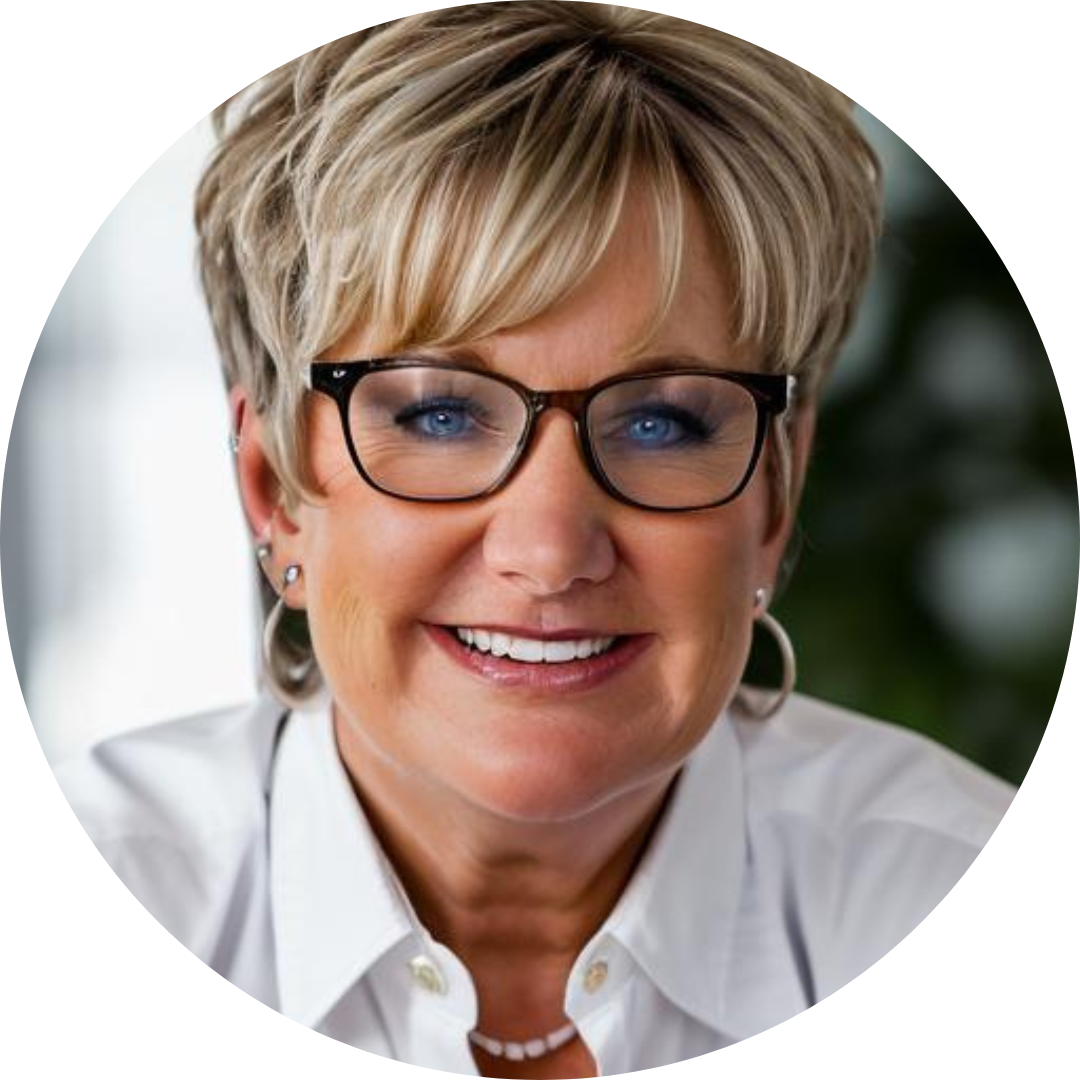
Shannon shares her lived experiences in hopes of creating a more inclusive world for our children and adults on the spectrum.
Our mission is to equip families with resources, training, coaching, and community support. We believe if you are willing to expose yourself, your child, and your family to the world with kindness and honesty that compassion and understanding will follow.
She presents to organizations and businesses in person and virtually.